

Welcome to the USIP Press Bookstore!
Following its mandate to promote the prevention, management, and peaceful resolution of international conflicts, USIP is committed to publishing significant works that offer new insights. Starting with four titles in the fall of 1991, USIP Press Books has published more than two hundred titles on peacebuilding, conflict analysis, and international relations. Please see our forthcoming and most recent books below and search for more titles by subject, title, author, or series.
New Books
A Guide for International Actors
October 2023
Determining whether and how to support grassroots actors can seem daunting. Nonviolent social movements, campaigns, and civic initiatives are, by their nature, bottom-up, homegrown phenomena involving the voluntary participation of citizens. These social movements are often fluid and decentralized, composed of multiple formal and informal entities arrayed in networks or coalitions. Is it possible to enable or support what are essentially organic groupings and processes? Based upon detailed research and extensive interviews, Shaazka Beyerle examines how external actors can support anti-corruption, transparency, accountability, and good governance movements and campaigns, and provides invaluable strategic questions, considerations, and practices to better inform donor policy decisions and practices to support peaceful citizen-driven change, particularly in fragile contexts.
The Inside Story of a Secret Attempt to Reach a Syrian-Israeli Peace
April 2022
This important and eye-opening book is an insider’s account of secret negotiations to broker a Syria-Israel peace deal—negotiations that came tantalizingly close to success. Ambassador Frederic Hof, who spearheaded the US-mediated discussions in 2009-11, takes readers behind the scenes in Washington, Damascus, and Jerusalem, where President Assad and Prime Minister Netanyahu inched toward a deal to return Israeli-occupied areas of the Golan Heights in exchange for Syria severing military ties with Iran, Hezbollah, and Hamas. Hof’s candid assessments, refreshing self-criticism, compelling prose, and rich historical detail make this a masterful memoir of an unknown chapter in American diplomacy.
Through Diplomacy
October 2019
Focusing on three case studies in Africa, this book analyzes the utility of diplomacy in preventing election violence. After defining and identifying the key dimensions of preventive diplomacy to prevent or reduce election violence, it looks at presidential elections between 2006 and 2017 in the Democratic Republic of the Congo, Kenya, and Nigeria. Drawing on personal experience, the literature, case study reviews, and expert interviews and roundtables with academics and practitioners, the book highlights conditions for the success and the failure of preventive diplomacy, offering recommendations to the international community for maximizing the efficacy of this unique tool.
Glossary of Terms for Conflict Management and Peacebuilding
Edited by Dan Snodderly
April 2018
An extensive glossary with
concise definitions of a wide range of complex and often confusing terms used in
the field of peacebuilding.
December 2019
Now also available in Arabic, French, and Spanish in print and ebook.
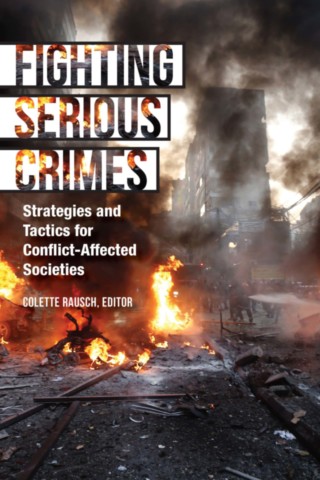
Strategies and Tactics for Conflict-Affected Societies
July 2017
Serious crimes—such as violent extremism, political violence, organized crime, and corruption—fuel violent conflict and thwart peacebuilding efforts. Fragile states with weak institutions and governance are unable to stem the tide of threats that serious crimes pose to peace. The consequences are all too evident across the globe: countries engulfed in political turmoil, conflicts that spiral into devastating wars, and tides of refugees fleeing instability and violence. Fighting Serious Crimes: Strategies and Tactics for Conflict-Affected Societies is an invaluable resource for anyone battling serious crimes in societies seeking to avoid conflict, to escape from violence, or to recover and rebuild. Packed with practical guidance, this volume includes real-world examples from more than twenty of today’s conflict zones, including Libya, Yemen, Iraq, Afghanistan, Somalia, and Colombia. All the major challenges are covered, from initial assessment to legal and institutional reform, investigation to prosecution, criminal intelligence to witness protection, the use of international tribunals to the role of international military forces. The volume draws on the firsthand experience of dozens of practitioners, distilling what they have learned into clearly organized and highly readable text that is supplemented by checklists and sidebars that help readers conduct assessments, identify international and regional legal instruments (such as treaties), and complete a host of other key tasks.
Violence Prevention at the Polls
Edited by Jonas Claes
January 2017
Electing Peace: Violence Prevention and Impact at the Polls examines election violence prevention and assesses the impact of prevalent prevention practices as applied in five recent elections in Honduras, Bangladesh, Thailand, Malawi, and Moldova. Through these case studies and comparative research, the authors evaluate the impact of prevention programming on the level of violence.
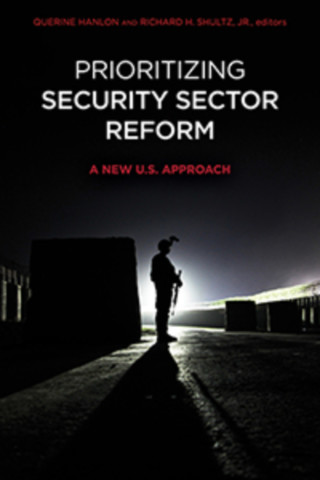
A New U.S. Approach
Edited by Querine Hanlon and Richard H. Shultz, Jr.
March 2016
Prioritizing Security Sector Reform: A New U.S. Approach argues that security sector reform should be at the core of a new U.S. policy to strengthen the security sector capacity of countries where U.S. interests are at stake. This volume offers case studies to exemplify the context in which a new U.S. approach might be warranted, discusses other countries’ experiences with security sector reform policies, and examines how the United States should design and implement a security sector reform policy.
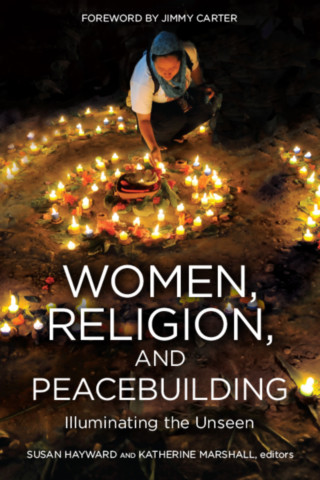
Illuminating the Unseen
September 2015
Women, Religion, and Peacebuilding: Illuminating the Unseen examines the obstacles and opportunities that women religious peace builders face as they navigate both the complex conflicts they are seeking to resolve and the power dynamics in the institutions they must deal with in order to accomplish their goals.
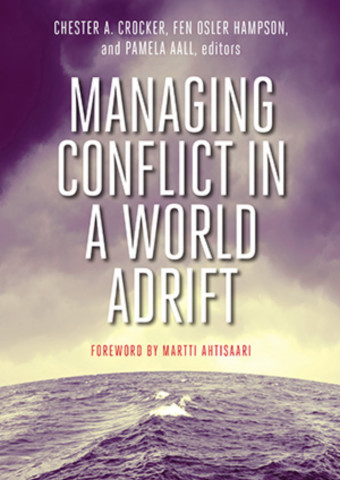
Edited by Pamela Aall
January 2015
In the midst of a global political shift where power moves from central institutions to smaller, more disbursed units, "Managing Conflict in a World Adrift" features lessons in contemporary theory and practice of conflict management. In this volume, forty of the world's leading analysts of international affairs provide innovative thinking about the relationship between political, social, and economic change and the outbreak and spread of conflict—and what this means in practical terms.
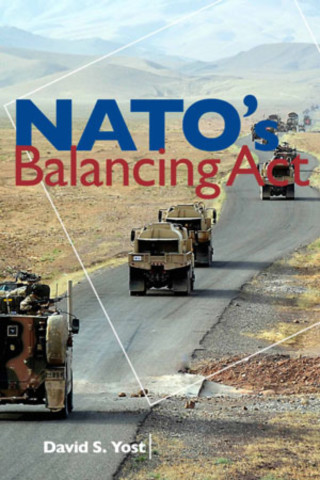
July 2014
NATO's Balancing Act evaluates the alliance’s performance of its three core tasks—collective defense, crisis management, and cooperative security—and reviews its members’ efforts to achieve the right balance among them. Yost considers NATO's role in the evolving global security environment and its implications for collective defense and crisis management in the Balkans, Afghanistan, Africa, Libya, and elsewhere.